Country-Specific Shipping Requirements
Key requirements for some of the most commonly shipped-to countries
Shipping internationally? Many countries have specific shipping requirements, and navigating them can be tricky. To help make the process easier, we've outlined the key requirements for some of the most commonly shipped-to countries. You'll also find guidance on entering the necessary details into Postsale when needed.
Help Avoid Delays & Additional Fees
This is not an extensive list of all international shipping requirements for all countries and international shipping requirements for the countries listed below may change, such as when new requirements are introduced by the destination country.
Before shipping, we suggest that you always double-check the destination country's requirements to avoid delays, extra fees, or unexpected tariffs.
The Requirements
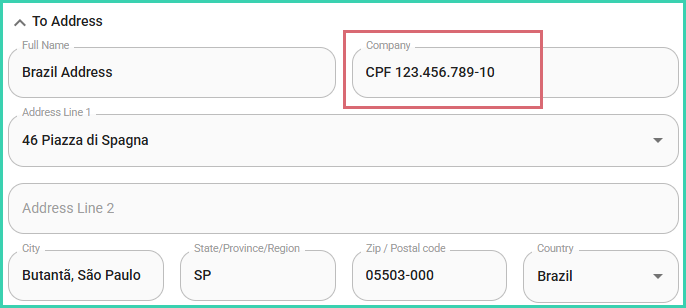
All shipments to Brazil must include either the CPF or CNJP on both the shipping label and on the customs documents.
Information About CPF & CNPL Tax IDs
-
CPF (Cadastro de Pessoas Físicas, or Natural Persons Register), or Individual Tax ID.
- A CPF is 11 digits long. It is comprised of 9 base digits with 2 digits at the end. Format: 123.456.789-10
- Individual Tax ID Format: For a CPF (Individual Tax ID number) include CPF before the number. The number format should be 3 groups of 3 numbers separated by a period then a dash followed by the final 2 numbers. Here's an example: CPF 123.456.789-10
-
CNPJ (Cadastro Nacional de Pessoas Jurídicas), or Business Tax ID. A CNPJ is a 14-digit number with 12 base digits and 2 digits at the end. Format: 123.456.789/0000-00
- Company Tax ID Format: For a CNPJ (Business Tax ID number), enter the Business Tax ID, followed by a dash, followed by their business name. Here's an example: 123.456.789/1011-12 - Business Name
What to Do in Postsale
Enter the CPF or CNPJ into the Country field of the Ship To address of the shipment.
The Requirements
All shipments entering the EU member countries must meet the following requirements to avoid possible delays and fines.
- Harmonized System Codes (HS Codes): All shipments now require Harmonized System Codes (HS Codes) for all items in a shipment.
- Accurate Descriptions: All items in a shipment must have accurate item descriptions. You can no longer use general categories like 'clothes' as item descriptions. They must be specific.
| ❌ Invalid Description | ✅ Valid Description |
|---|---|
| Clothes | Women's Cotton Sweatshirt |
| Shoes | Men's Leather Sandals |
| Electronics | 24" Flat Screen Computer Monitor |
What to Do in Postsale
Make sure that an accurate package description, item descriptions, and correct HS Codes are entered into the appropriate customs fields. When configuring your international shipment:
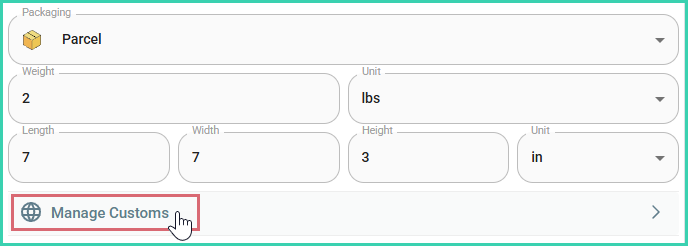
- Click Manage Customs in the Package section of the Dock.
-
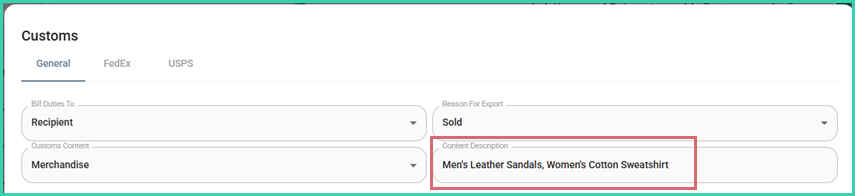
Verify that the General tab is selected.
-
Enter an accurate description of all of the contents of the package into the Content Description field.
-
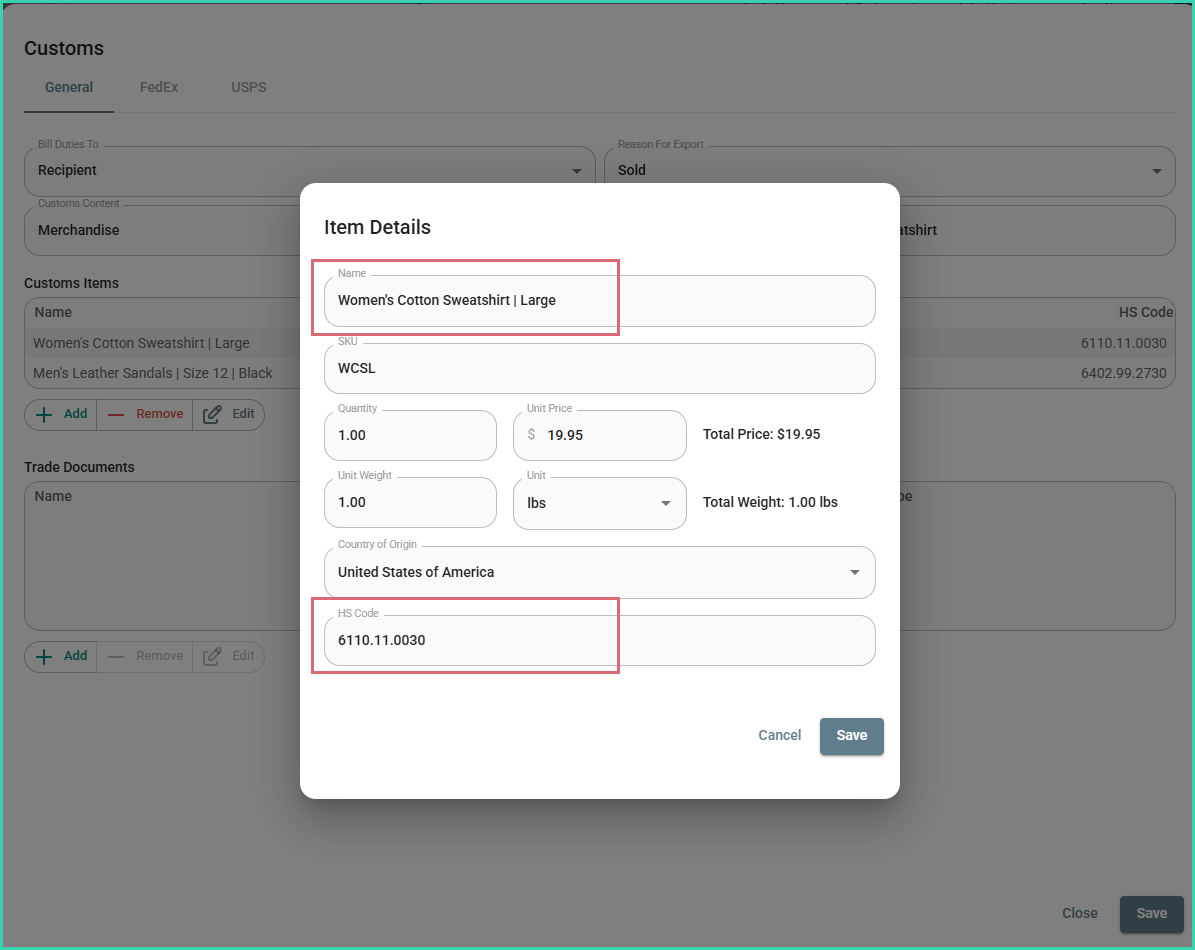
Edit all items in the Customs Items section.
-
Enter a valid description into the Name field.
-
Make sure that the correct HS Code is entered into the HS Code field.
-
The Requirements
Retailers and manufacturers that sell or ship packaged goods to customers in Germany must adhere to Germany's VerpackG (Packaging Act) which relates to the collection and recycling of packaging materials.
What to Do in Postsale
The good news is that there nothing that needs to be done in Postsale. Germany's Central Agency Packaging Register has internal systems that match outbound packages with the merchant's LUCID identification number, eliminating the need to enter it when creating shipping labels.
Helpful Information
- Visit the LUCID Packaging Register website for information on who is required to register for an identification number and for answers to frequently asked questions.
- Once registered, we suggest that you reach out to your selling channels (WooCommerce, etc.) to get information on how to add the LUCID Packaging identification number in your store.
The Requirements
In 2023, the Mexican Tax Authority began enforcing the Carta Porte requirements which mandate that all shipments to and within Mexico include a Package Description field that accurately describes the contents of the shipment. This description is in addition to the customs forms item descriptions and applies to all shipping carriers.
Shipments that do not comply with these requirements will be subject to delays as well as penalties from the Mexican Government.
Description Details
- The description can be a maximum of 35 characters.
- The description should be a summary of all the contents of the package.
- Packages containing only one item can use the same description used for the item in the customs declaration.
- Multi-package shipments require a package description for each package and should describe the actual contents of the individual packages.
What to Do in Postsale
Make sure that an accurate package description is eneterd into the Content Description field in the Customs information of your shipment. Here's how:
- Click Manage Customs in the Package section of the Dock.
-
Verify that the General tab is selected.
-
Enter an accurate description of the contents of the package into the Content Description field.
Helpful Resources
The Requirements
All shipments to Saudi Arabia from any other country as well as shipments originating from within the Kingdom require the recipient's Short Address code/National Address.
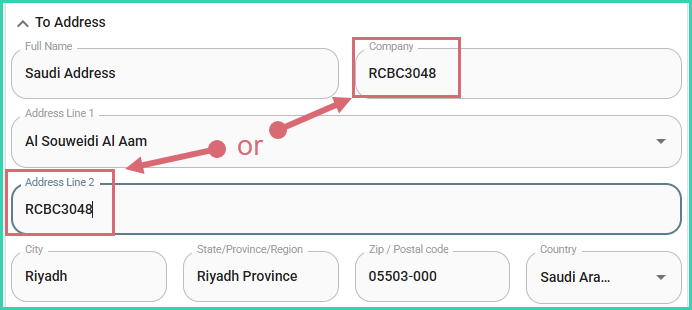
A short address consists of four letters and four numbers representing the Region Code, Branch Code, Division Code, and Building Number. For example: RCBC3048.
What to Do in Postsale
-
If needed, contact the recipient and request their Short Address code/National Address.
-
Enter the Short Address/National Address code into either the Company or Street Address Line 2 field of the Ship To address for the shipment. Either field can be used. For example, if the Address Line 2 field is populated, enter the code into the Company field and vice versa.
Helpful Resource
The Requirements
All goods shipped to the UK are subject to VAT (Value Added Tax) regardless of the price of the goods in the shipment.
Depending on the exact method of how goods arrive in the Unoted Kingdom, VAT requirements differ. Here are three scenarios that may affect you:
- E-commerce marketplace sales: The marketplace is responsible for collecting and remitting the VAT to the proper UK customs authority.
- If you only do marketplace sales, you do not need an EORI number since collecting VAT is the marketplace's responsibility.
- Register an EORI Number to Ship to The UK: If a product is sold and exported in an e-commerce environment outside of a marketplace sale (not sold through a marketplace such as eBay, Amazon, etc.), you might be required to register directly with the HMRC (the UK Customs Authority).
- Brands shipping direct to consumer (not via a marketplace)
- DDP (Delivery Duty Paid): You do not need an EORI number. The carrier will bill you for the tax on a per shipment basis. You should contact the carrier to discuss how this will be billed to your account. You may still need to collect the fees from customers upon checkout.
- DDU (Delivery Duty Unpaid): It is recommended that you set up an EORI number so you can proactively pay the tax to HMRC. This has the added benefit of helping to keep shipping costs low.
- Brands shipping direct to consumer (not via a marketplace)
- You are outside of the UK, but already have products in the UK or have products with a fulfillment provider in the UK: You will be responsible for accounting for the VAT on goods already in market and will have to account for it with the HMRC as well.
What to Do in Postsale
The good news is there is nothing you need to do in Postsale! This is for your information only.
Helpful Resources
- GOV.UK Import Goods into the UK step-by-step guide: Guides merchants through checking requirements, how to sign up for EORI number, and walks merchants through the entire process of importing goods into the UK.
- Apply for an EORI number
- Register and pay taxes in the UK
The Requirements
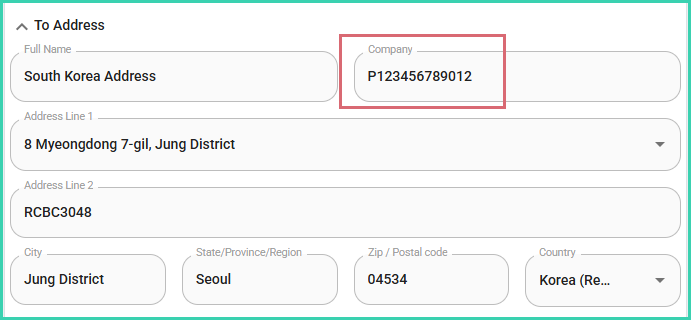
Shipments sent to South Korea must include the recipient's Personal Customs Clearance Code (PCCC) on labels and customs documents.
- When accepting orders from customers in South Korea, you should collect the customer's PCCC.
- You can check with your selling channels for the best methods of collecting the PCCC from your customers.
- If the package recipient is a non-Korean foreign national without a PCCC number, they can use their passport number.
- Any shipment missing this information will be subject to either return or disposal by customs authorities.
What to Do in Postsale
Enter the PCCC into the Company field of the Ship To address for the shipment to ensure that it is displayed on shipping label and customs forms.
The Requirements
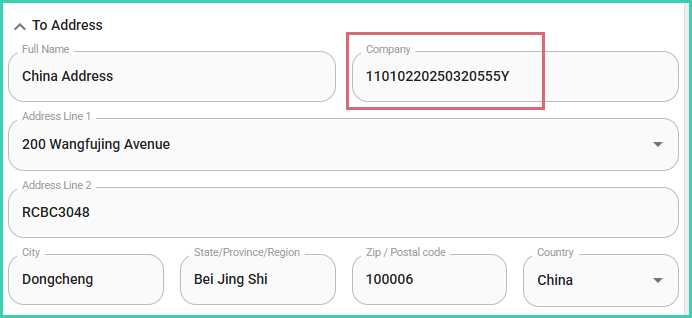
Shipments sent to China must include the recipient's People's Republic of China Resident Identity Card (Resident ID) number on labels and customs documents. Any shipment missing this information will be subject to either return or disposal by customs authorities.
When accepting an order from a customer in China, you should collect their Resident ID. You can check with your selling channels for the best methods of collecting this information from your customers.
What to Do in Postsale
Enter the Resident ID into the Company field of the Ship To address for the shipment to ensure that it is displayed on shipping label and customs forms.
On this page
Related